I think I am onto something interesting. It struck me again that you do not find the best opportunities among the steady winners. You find them among the losers: the shares that have been falling for a long time and losing speed, for whatever reason.
When one of those, for whatever reason, breaks back through its long-term resistance lines and its 200-day moving average, it is back in the show. The licking of wounds behind the scenes, the cutting of costs and the streamlining are over, and it is showtime again!
This is how I look at it. These are my own views and what I am watching, not instructions to anyone.
Looking among the losers
So I am now looking at shares that trade easily and have taken a beating over the last few years.
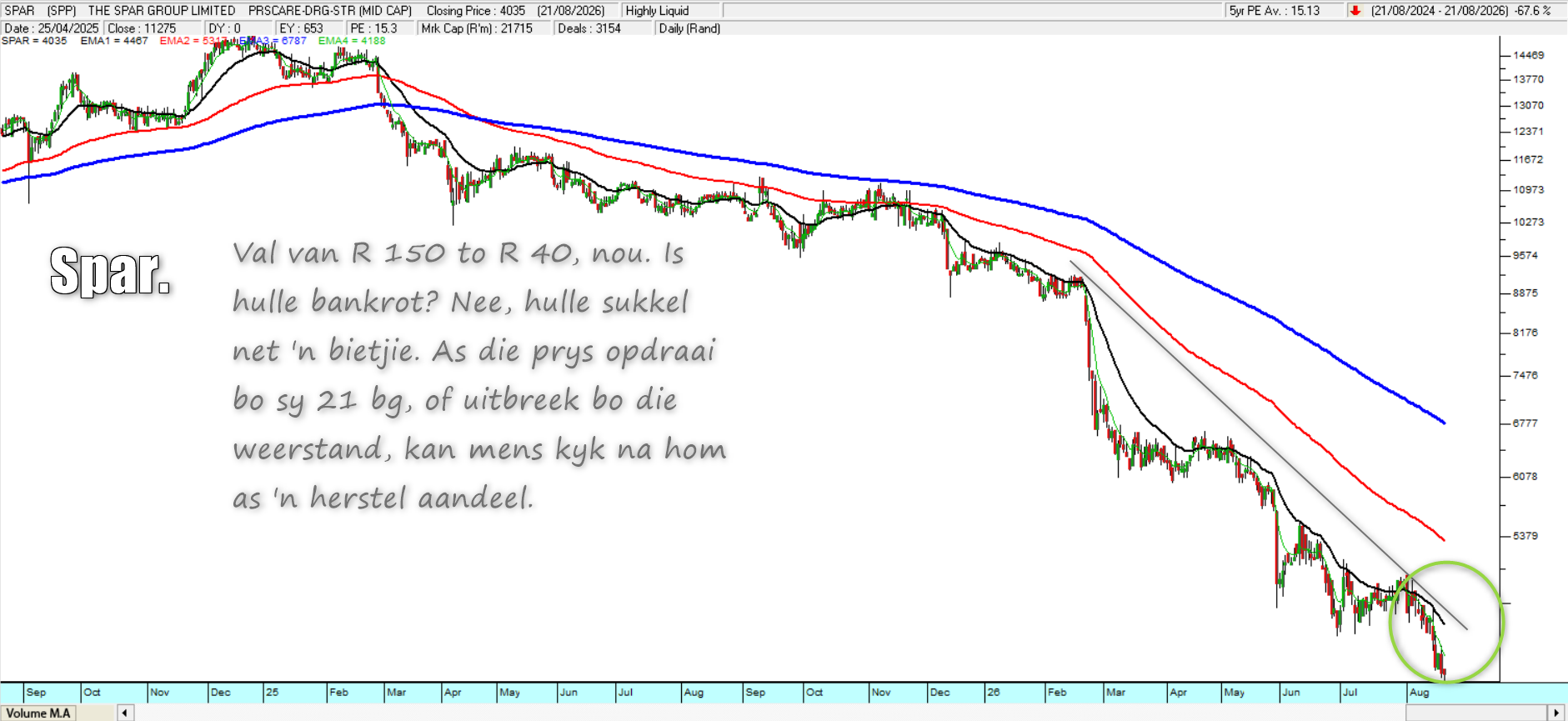
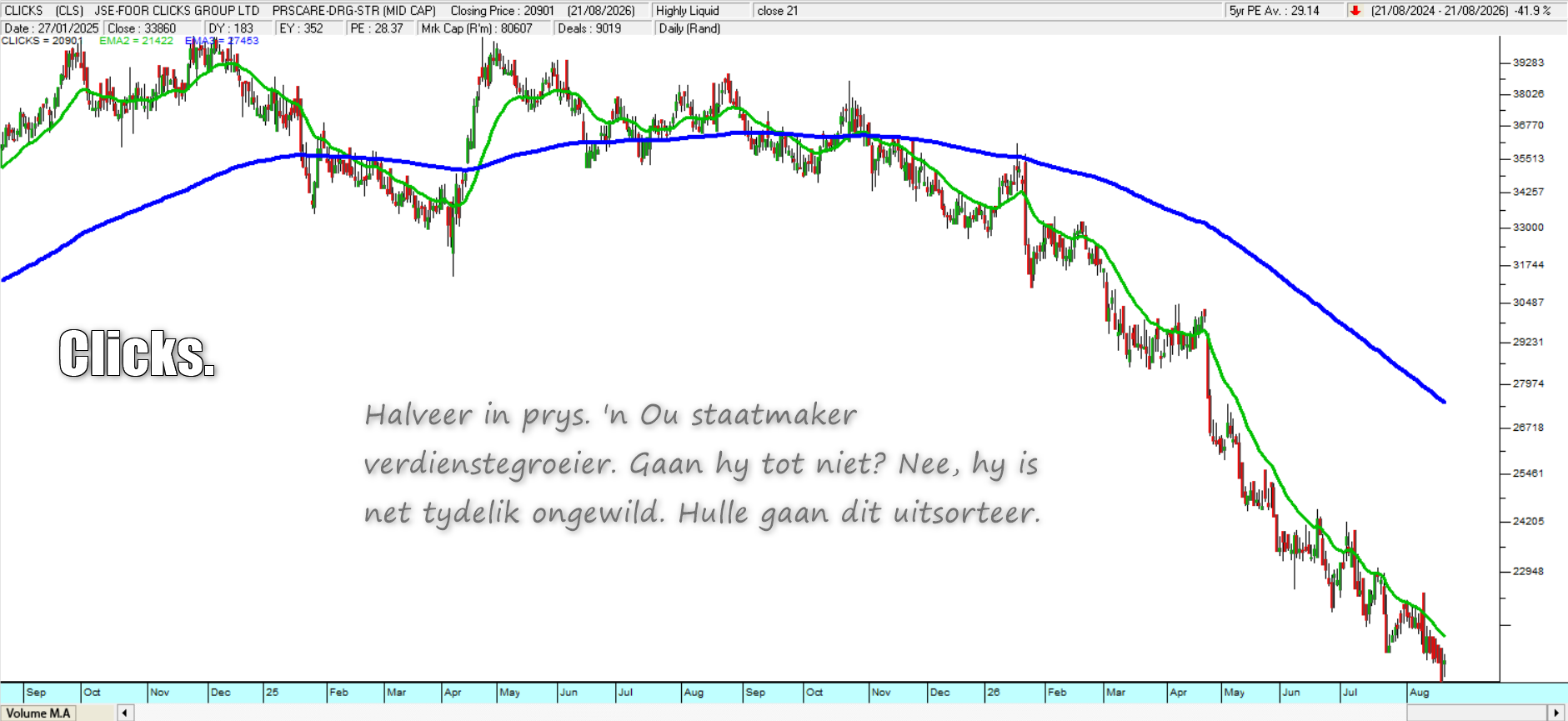
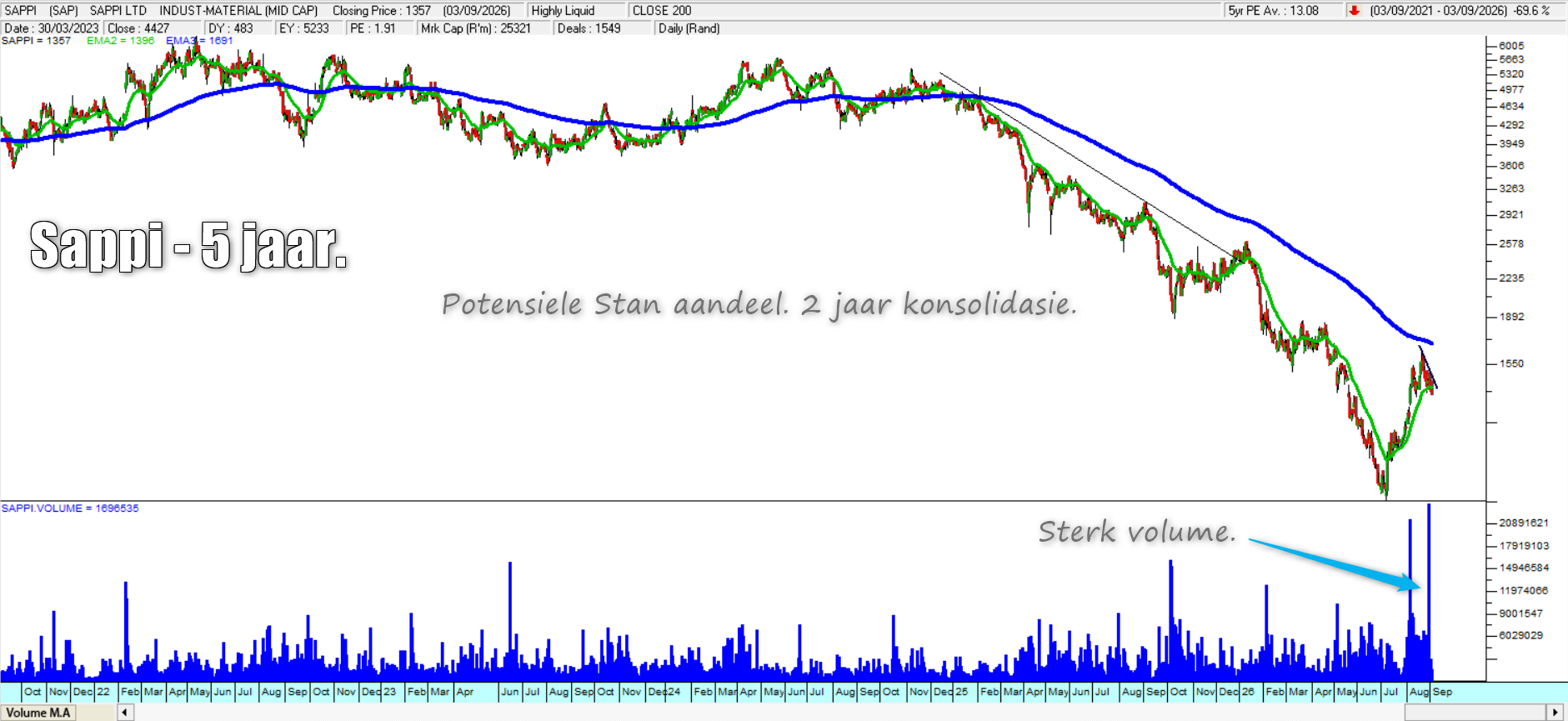
Spar is a good example. The price fell by 70% [1]. Sappi is another good example. On 3 September I wondered out loud whether Clicks and Spar are coming to life. I look at Clicks more closely in the next part.
The charts I am looking at
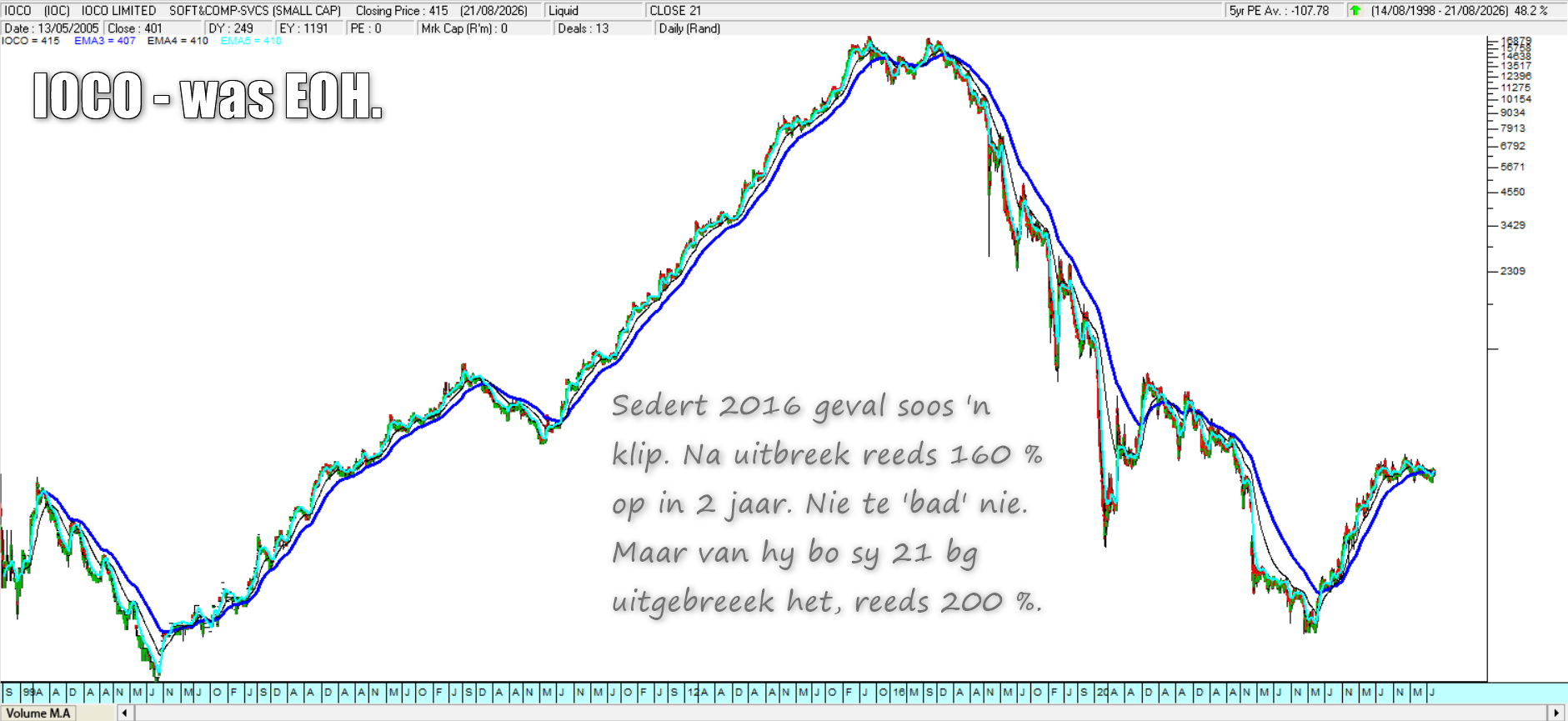
Here are the charts behind this, as I marked them up for myself. Tap a chart to see it full size.


Afrimat
It is hard to pick the true bottom of a share like this. But when you get it right, it works. The one advantage is that the worst of the falls is probably behind it already. The upside is big if it starts to look as though the people running it are making money again. Just thought I would mention it. Afrimat is on my list. In my view a share like this could double [2] once it comes to life.

Optasia: what do they do?
I also looked at Optasia. I asked ChatGPT to explain the company, so please treat the rest of this section as unverified [3].
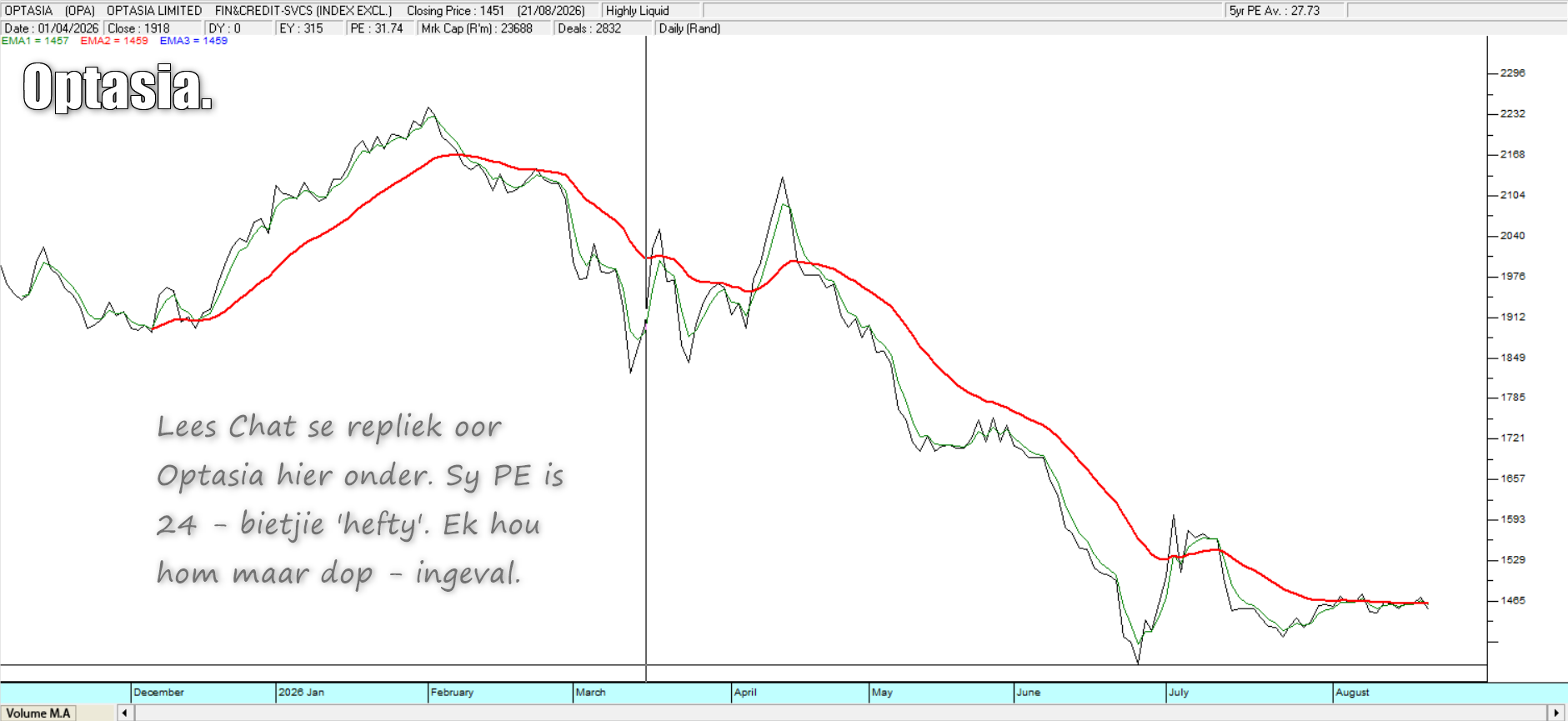
As I understand the chat, Optasia is not a traditional bank. It is an AI-driven financial infrastructure company that makes financial services possible for people who cannot easily get to a bank. It works mainly in Africa, the Middle East and Asia.
Picture a mobile network customer in Ghana or Nigeria. They always buy airtime, but today their balance is empty and payday is two days away. Within milliseconds the Optasia system looks at their airtime buying history, how often they top up, how long they have been a customer and hundreds of other data points. Its AI then decides whether they can have some airtime on credit. The same idea works for small cash loans, data bundles, phone financing and small loans for small businesses. The whole process takes a few seconds.
According to the chat, Optasia does not necessarily lend its own money. It supplies the technology that judges creditworthiness, approves the loan, pays out the money and collects when the customer is paid again. The capital often comes from banks, mobile operators and other financial institutions, and Optasia earns fees for the service. That is why it calls itself a financial infrastructure platform.
Why does the AI matter? In many developing countries millions of people have no bank account, no credit record and no payslips. An ordinary bank would say it cannot judge the risk. Optasia uses phone usage, payment patterns, location and purchase history instead, and so builds a credit profile for someone who has never been inside a bank.
The chat also gave me a short history and some numbers. The company was founded in 2012, started with airtime advances, and today works in about 38 countries with more than 120 million active users a month [4]. It listed on the JSE in late 2025 [5]. The latest figures it gave me were turnover up 76%, loans of about US$5.5 billion, normalised profit up 57% and a default rate of only about 1.2% [6].
The chat listed what investors like: the business can scale, because each extra loan costs very little once the software is built; the more loans it processes, the smarter its models become; others supply most of the loan capital; and the market is huge. It listed the risks too: digital lending rules could change, a weak economy could raise defaults, it depends on big partners such as mobile operators, and it must keep proving its AI manages risk. After the listing, some market commentators also asked questions about a related-party acquisition and large share sales by the founder [7].
The chat’s overall impression was that Optasia looks like a mix of a software company, a data analytics business and a credit platform. If it can keep its AI advantage and expand into more emerging markets, there may be real room to grow. But because it leans on credit and technology, the chat thought it is probably also more volatile than traditional banks.
I find that interesting. I am watching, and I will keep you posted.
A few days later: Spar, Clicks and Sappi
In the first days of September I looked at three of them again.



Sources
- SOURCE NEEDED: Spar's share price fell by 70%. No source named in the email (the sentence continues about earnings per share but is cut off; the figures may be in the attached images). ↑
- SOURCE NEEDED: Koot's own expectation that a recovering share such as Afrimat "could double" (the email says such shares rise "quite easily 100%"). No source named; it is Koot's opinion. ↑
- SOURCE NEEDED: Description of what Optasia does and how its AI credit system works. Source named: ChatGPT ("Chat"). Unverified. ↑
- SOURCE NEEDED: Optasia founded in 2012; about 38 countries; more than 120 million active users a month. Source named: ChatGPT. Unverified. ↑
- SOURCE NEEDED: Optasia listed on the JSE in late 2025. Source named: ChatGPT. Unverified. ↑
- SOURCE NEEDED: Optasia's latest figures: turnover +76%, loans about US$5.5 billion, normalised profit +57%, default rate about 1.2%. Source named: ChatGPT. Unverified; no reporting period given. ↑
- SOURCE NEEDED: Questions from "some market commentators" about a related-party acquisition and large share sales by the founder after the listing. Source named: ChatGPT. Unverified. ↑