Someone I have been listening to is Seth Capehart, who I understand was a special-forces soldier in the US army [1]. Like me, he had to learn what health really means. Because he was a soldier, his language is not always very precise. I forgive him that and listen to what he says about health: eating right, exercising, the right lifestyle and the right attitude. We agree on a lot.
His food story matches how I see things today, 100%. This is the video I watched [1].
Eat “primal”
The key idea, as I understood it, is to eat “primal” [1]. By that he does not mean keto, low-carbohydrate or carnivore. He means mostly whole, unprocessed food:
- meat, fish and eggs;
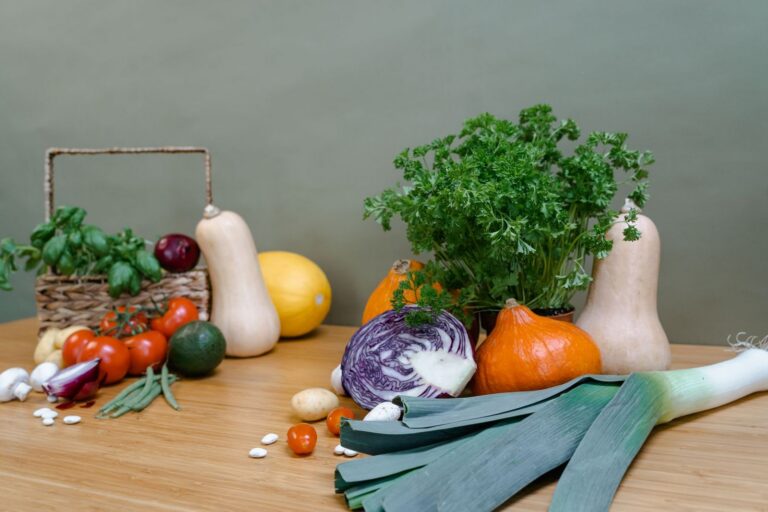
- vegetables and fruit;
- tubers such as potatoes and sweet potatoes;
- as little heavily processed factory food as possible.
That matters: he is not against carbohydrates. Fruit and tubers are part of his way of eating [1].
In my view this is the only way that makes sense. Sweets and processed factory food, with chemicals we do not need and too much sugar, fat and protein, have brought most of us to where we are today: overweight, and many of us very unfit [2]. The result is metabolic syndrome, which means already unhealthy to some degree [2]. One day you feel fine, the next day you are on the operating table for stents or bypasses [2]. Drama!
How I eat now
I have cut out all the sweet treats. We did have a pudding at friends on a Sunday afternoon, because we do not want to put other people on the spot about how we eat. But for about two weeks, that was it. My first weekend without red wine was not nearly as bad as I thought.
- No processed food and no processed drinks.
- As little unnecessary fat as possible, such as butter and cheese. We already carry enough fat on and in our bodies [3].
- Eggs do contain fat, but they are so nourishing that I eat two boiled eggs every morning after my little bowl of oats [3].
- A wide variety of vegetables and fruit, and everything in moderation [3].
In my head the word “tasty” has been replaced by “healthy”. I ask what my body needs to become as healthy as it can. We do not live to eat; we eat to stay alive, and to have a quality life. I want to give my body as much of the essential nutrients as I can, so that it can flourish [3].
Why I am eating less meat
I am eating less and less meat. I still eat beef and lamb, in moderation.
My reason is something called mTOR. This is my own reasoning, and I know it is contested [4]. Others may well argue with me, but I have to try to separate the chaff from the wheat for myself.
As I understand it, mTOR is a growth controller inside your cells. Its name stands for “mechanistic target of rapamycin” [4]. It looks at conditions in the cell: is there enough energy, enough amino acids from protein (especially one called leucine), and growth signals such as insulin? If there is plenty, mTOR more or less says: “We have enough. Build and grow.” It then boosts protein production and muscle growth, and reduces autophagy, which is the cell’s recycling and clearing out of damaged material [4]. When food and energy are scarce, for example long after a meal, mTOR activity drops and repair and recycling get more room [4].
So where there is plenty of protein, mTOR tells the cell to build. If there is protein all the time, the cell just builds and never gets the clean-up and repair done. My conclusion is that too much mTOR activity from too much protein is not good for my health [4].
What I do know from my own body is this. When I have eaten too much meat, I sleep badly, and at 3 in the morning the sweat rolls off me. I suspect my liver is working hard to get rid of all that protein, but that is my guess and I cannot prove it [5].
This is how I eat, not a prescription. If you have a health condition or take medication, please talk to your doctor before you change what you eat.
A word on exercise
This morning I can feel that I jogged 8 km yesterday, but I stretched my body a little. I let it realise that the fellow it houses still has plenty of plans, so it had better keep up. Comfortable, cosy and lazy is no longer such a big part of my life as it used to be. It is a choice I had to make if I want to stay as healthy as possible for as long as possible.
So far, that is our metabolism. It is important to know what role the three macronutrient groups play in it: sugar (glucose, or carbohydrates), fat and protein. Each is metabolised differently, and we need to know how to eat the right amount of each.
To be continued.
Blessings, Koot.
Sources
- SOURCE NEEDED: confirm this video and what it says: https://www.youtube.com/watch?v=Bd1g2WlGqzM (the link Koot gave). Please confirm the speaker's name (Koot writes Seth Capehart), that he is a former US special-forces soldier, and that his "primal" eating (whole food; meat, fish, eggs; vegetables and fruit; potatoes and sweet potatoes; little factory food; not keto, low-carb or carnivore) is described as set out above. ↑
- SOURCE NEEDED: Koot's claim that sweets, processed food and an excess of sugar, fat and protein have made most people overweight and unfit and led to metabolic syndrome, and that this can end in stents or bypass surgery. No source named by Koot. ↑
- SOURCE NEEDED: Koot's dietary views: keep unnecessary fat such as butter and cheese low, eggs are very nourishing, eat a wide variety of vegetables and fruit in moderation to supply the essential nutrients. No source named by Koot. ↑
- SOURCE NEEDED: Koot's explanation of mTOR (what it is, what switches it on and off, its effect on protein production, muscle growth and autophagy, and that a lot of protein all the time means too much mTOR activity that is bad for health). This is Koot's own reasoning, it reads like text from an AI chat, and it is contested. Needs a scientific source, and a doctor or dietitian should check how it applies to ordinary readers. ↑
- SOURCE NEEDED: none known. This is Koot's own observation (poor sleep and sweating at 3 am after too much meat); the liver explanation is his guess and is presented as such. ↑